ouraring

Science & Research

Grounded in science, driven by research

Our approach to combining clinical research, innovative technology, and user feedback is helping us create the most scientifically validated smart ring.

Our research-driven approach to innovation

At Oura, we develop cutting-edge sensing technology that exceeds the highest scientific standards and pursue original discoveries that deepen the understanding of human health.

30+ PhDs

across our data science, engineering, and health science research teams

130+

peer-review publications contributing to advancing science

10+ Years

of research and innovation

14

active collaborations with academic and clinical institutes worldwide

Unparalleled accuracy

Research-Grade Sensors

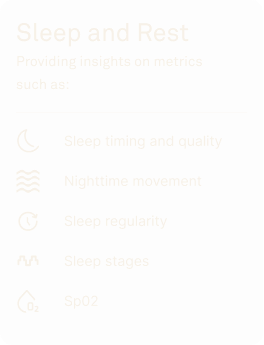
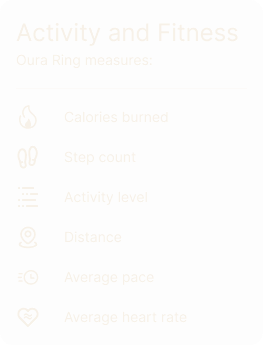
Oura Ring is powered by sensors that adapt to your unique physiology — delivering accurate, continuous data, day and night.

  • Red and infrared LEDs measure blood oxygen levels while you sleep
  • Green and infrared LEDs alternate to measure heart rate and heart rate variability 24/7 and respiration rate during sleep
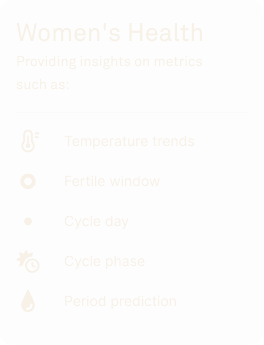
  • Negative temperature coefficient (NTC) sensor tracks temperature trends
  • 3D Accelerometer tracks movement and activity 24/7

99%

Heart Rate Accuracy r² compared to ECG22

98%

Heart Rate Accuracy Variability r² compared to ECG22

94%

Ovulation Detection Accuracy Compared to ovulation prediction kits

79%

Sleep Tracking Accuracy Compared to clinical polysomnography by at 83%

Unparalleled accuracy

Research-Grade Sensors

Oura Ring is powered by sensors that adapt to your unique physiology — delivering accurate, continuous data, day and night.

  • Red and infrared LEDs measure blood oxygen levels while you sleep
  • Green and infrared LEDs alternate to measure heart rate and heart rate variability 24/7 and respiration rate during sleep
  • Negative temperature coefficient (NTC) sensor tracks temperature trends
  • 3D Accelerometer tracks movement and activity 24/7

99%

Heart Rate Accuracy
r² compared to ECG21

98%

Heart Rate Variability Accuracy
r² compared to ECG21

94%

Ovulation Detection Accuracy
Compared to ovulation prediction kits

79%

Sleep Tracking Accuracy
Compared to clinical polysomnography at 83%2

99%

Heart Rate Accuracy
r² compared to ECG21

98%

Heart Rate Variability Accuracy
r² compared to ECG21

94%

Ovulation Detection Accuracy
Compared to ovulation prediction kits

79%

Sleep Tracking Accuracy
Compared to clinical polysomnography at 83%2

Independently validated sensors

Oura Ring’s sensing capabilities have been independently validated in several peer-reviewed publications, including the Journal of Medical Internet Research, Sensors, and Sleep Medicine.

The Promise of Sleep: A Multi-Sensor Approach for Accurate Sleep Stage Detection Using Oura Ring

Oura Ring's Ovulation Detection Algorithm Outperforms Calendar Tracking Method in New Validation Study

Heart Rate and HRV: Oura Ring’s Average Nighttime Values Correspond Near-Perfect with ECG

What does Oura Ring measure?

Powering research published in over 130 peer reviewed publications

Top researchers and institutions use Oura Ring in their research to
improve public health.

Physiological Data Collected from Wearable Devices Identify and Predict Inflammatory Bowel Disease Flares

ScienceDirect May 2025

Biometrics of Complete Human Pregnancy Recorded by Wearable Devices

npj Digital Medicine Aug 2024

Effects of Fluid Intake on Sleep Duration and Quality Among Healthy Adults

Nature and Science of Sleep May 2025

Exploring the Potential of a Smart Ring to Predict Postoperative Pain Outcomes in Orthopedic Surgery Patients

Sensors Aug 2024

Predicting Stress in First-year College Students Using Sleep Data from Wearable Devices

PLOS Digital Health Apr 2024

Elevated Body Temperature is Associated with Depressive Symptoms: Results from the TemPredict Study

Science Reporter Feb 2024

Researchers have used Oura Ring to study cycle and ovulation regularity, the association between body temperature and depression, and more.

A study collected data to inform numerous Oura algorithms, including Daytime and Workout Heart Rate, Automatic Activity Detection, and Daytime Heart Rate Variability.

A large-scale research effort using Oura Ring data to retrospectively analyze 10,000 pregnancies, advancing public understanding of pregnancy-related conditions and identifying potential warning signs of complications.

The National University of Singapore found Oura Ring to be the most accurate consumer wearable for sleep tracking among the devices studied.

A groundbreaking collaboration between Oura, Duke University, Google Fitbit, UNC-Chapel Hill, and other leading organizations to explore how physiological and behavioral data from wearable devices can help identify early signs of opioid relapse.

Data was collected and used in developing and validating the newest version of Oura Ring’s sleep staging algorithm, as well as Oura Ring’s blood oxygen sensing (SpO2) feature.

Highlights from Oura-led research

FEATURED STUDY

Oura Launches First Clinical Trial to Measure AI Advisor's Ability to Promote Cardiovascular Health

Country Differences in Nocturnal Sleep Variability: Observations from a Large-scale, Long-term Sleep Wearable Study

Aug 2023

Predicting Labor Onset Relative to the Estimated Date of Delivery Using Smart Ring Physiological Data

Sep 2023

Feasibility of Measuring Physiological Responses to Breakthrough Infections and COVID-19 Vaccine Using a Wearable Sensor

Mar 2023

Accelerate your research with the power of Oura

Work with us on future clinical studies.